
Author: cb_tester

  • One year building, three months selling, zero customers. Frustrated and exhausted – where did I go wrong? i will not promote

    One year building, three months selling, zero customers. Frustrated and exhausted – where did I go wrong? i will not promote

    In the fast-evolving world of artificial intelligence (AI), ensuring compliance with various regulations has become increasingly challenging. The need for tools that address these issues is apparent, yet the journey to market such a tool can often be fraught with uncertainty and struggle. For entrepreneurs, particularly in tech, the path to finding product-market fit is a challenge that requires not only innovative ideas but also perseverance in sales and outreach strategies. In this blog post, we will explore the nuances of developing and selling an AI compliance tool, drawing on real experiences from an entrepreneur in the field. By the end, you will gain insights into the complexities of B2B sales, strategies for identifying your target market, and tips for navigating the murky waters of early-stage business development.

    The past year has been a whirlwind for many, especially those in the tech sector trying to keep up with the rapid advancements in AI. With new regulations surfacing regularly, the potential for compliance solutions seems vast and ripe for exploration. However, the work of translating this potential into a viable business offering is not straightforward. We’ll delve into the trials faced by an entrepreneur who has been developing a compliance tool designed specifically for AI agents, posing pressing questions about whether the current approach is right and whether the problem being addressed holds genuine value in the market.

    Through this article, we will cover the importance of customer validation, address common missteps in outreach tactics, and share practical advice drawn from real-life experiences in the industry. Let’s begin by examining the landscape of compliance tools for AI and why understanding the market is essential.

    The importance of compliance in AI cannot be overstated, as it directly impacts user trust and security. With the rise of AI applications in sectors like banking and healthcare, the regulations surrounding these industries are becoming stricter. Entrepreneurs in this space face the dual challenge of not only developing effective compliance tools but also convincing potential customers of their necessity. In this context, it’s important to first explore the common concerns that arise during the initial sales phase.

    One of the prominent concerns for startups in the B2B sector is whether the timeline for acquiring paying customers is realistic. In the case discussed, three months of outreach yielded no paying customers. Is this a bad signal? While three months may seem lengthy, it’s essential to consider the nature of the market being targeted. Federal contractors, for instance, are often slow-moving entities due to bureaucratic processes, which raises questions about whether the sheer choice of audience is the underlying problem. This sections addresses the importance of aligning your product with the right target audience and stresses the need for continuous evaluation of your customer profiles during outreach efforts.

    Along the journey to acquiring that elusive first customer, anecdotal evidence from industry peers often serves as both guidance and caution. Many successful entrepreneurs recount a timeline that includes extensive research, outreach, and sometimes multiple pivots before landing a first contract. The challenge lies in determining the right strategies for acquiring that initial customer. Exploring not just what you are offering but how your product integrates into potential customers’ workflows is paramount. Considering this, the article will outline a step-by-step approach to gathering feedback from prospective users, which emphasizes the importance of trial and error in early business development.

    Another aspect deserving attention is building impactful relationships with leads. One entrepreneur highlights their experiences with warm conversations that lead nowhere. This illustrates the importance of viewer engagement and trust-building in business development, especially in industries wary of adopting new technologies. In this context, we will share practical tips on how to effectively cultivate relationships that could eventually lead to pilot opportunities or sales, which can be more valuable than merely cold outreach.

    Moreover, the risk of developing an impressive tool that ultimately lacks market necessity is a daunting realization for many founders. It raises the crucial question: At what point do you determine that the problem isn’t in the sales process, but rather that there is a fundamental mismatch between the product and market needs? This section will explore how to gauge product-market fit through tangible metrics, feedback, and pivoting strategies that allow businesses to realign their offerings to better meet customer needs.

    At this stage, the experience from the journey shared through the development of the AI compliance tool serves as a foundation for practical advice that entrepreneurs can apply. Here are several tips to consider as you navigate early-stage business development:

    1. **Conduct Market Research**: Before investing time and money into building a product, take the time to validate that a real need exists. Engage with potential users through forums, surveys, and discussions. Assess whether customers view compliance as a critical and immediate concern or a future consideration.

    2. **Refine Your Target Audience**: If you focus on federal contractors but find slow uptake, consider whether industries with less regulatory fluff, such as tech startups or mid-size companies, may be more receptive to your offerings.

    3. **Leverage Warm Outreach**: When possible, engage in relationship-building rather than relying solely on cold emails. This can include attending networking events or webinars where your target audience congregates.

    4. **Iterative Feedback**: Use feedback not just for fine-tuning the product but also to inform your sales tactics. If potential customers express hesitance to purchase, determine the specific issues—be it features, integrations, or value propositions.

    5. **Be Prepared to Pivot**: If the initial effort yields no traction, assess whether your product can be adapted to address different pain points or if the solution is a case of “too early” for the market.

    As we conclude, it’s important to reinforce the significance of perseverance in the world of entrepreneurship, especially in tech. The journey toward product-market fit may bring moments of doubt, yet it is often the critical feedback and experiences gained that lead to valuable change. Startups must continually challenge their assumptions about their product and listen intently to market signals.

    Entrepreneurs and creators are often left wondering whether they have misunderstood a core market need or whether they are simply facing the natural hurdles that come with innovation. In navigating this landscape, it is vital to approach setbacks as learning opportunities and iterate on both the product and outreach methods consistently.

    For further reading, I recommend exploring works by thought leaders in startup development, such as Eric Ries’ “The Lean Startup”, which emphasizes the importance of validated learning and a customer-centric approach. Additionally, connecting with entrepreneurs via platforms such as LinkedIn can lead to fruitful discussions that provide insights pertinent to your specific journey.

    Remember, the road to customer acquisition and a successful product is a marathon, not a sprint. Keep pushing forward, and the challenges you face will become the foundation of your future success.

  • What is your expectation about AMD stock

    What is your expectation about AMD stock

    As the tech landscape continuously evolves, certain companies stand out due to their innovative approaches and strategic market positioning. Advanced Micro Devices, Inc. (AMD) is one such company that has garnered significant attention from investors and industry analysts alike. AMD, known for its semiconductor products and cutting-edge processors, represents a fascinating case in the realm of stock investments. Understanding investor expectations about AMD stock is crucial not only for those considering a purchase but also for anyone interested in the semiconductor market and technology trends. This article delves into the factors influencing AMD’s stock performance while providing insights on what investors might expect in the future.

    The semiconductor industry has experienced unprecedented growth in recent years, largely driven by the rise of artificial intelligence, data centers, and the ongoing push for faster computing in various devices. AMD has strategically positioned itself to capitalize on these trends, particularly with its Ryzen and EPYC product lines. These processors challenge competitor Intel’s market dominance and have gained popularity among gaming enthusiasts and enterprise customers alike. Furthermore, AMD’s successful partnerships with major tech players, including Microsoft and Sony, have solidified its role in powering next-generation gaming consoles.

    When analyzing AMD’s stock performance, it’s essential to consider its financial health and growth trajectory. The company has reported strong revenue growth in recent quarters, driven by its competitive product offerings and market share gains. For example, AMD’s revenue surged significantly in the last fiscal year, with a notable increase in its operating margins, indicating that it not only sells more products but also does so effectively. Investors looking to forecast AMD’s stock performance often turn to these financial metrics, as they provide a concrete basis for evaluating potential future growth.

    However, it’s not all smooth sailing for AMD. The semiconductor market is characterized by intense competition and rapid technological advancements. Companies like NVIDIA and Intel pose significant challenges, continuously innovating to maintain their market positions. AMD’s ability to stay ahead will hinge on its continued investment in research and development. The push for next-generation chips and advanced manufacturing processes remains vital, and any slowdown in these areas could negatively impact its stock performance. Keeping an eye on AMD’s R&D efforts is crucial for investors seeking to gauge its future position in the market.

    The macroeconomic environment also plays a fundamental role in influencing stock prices. Factors such as interest rates, inflation, and overall economic conditions can heavily affect investor sentiment. For instance, during times of economic uncertainty, tech stocks, including AMD, may experience heightened volatility. Understanding these broader economic indicators and how they relate to the tech sector can empower investors to make more informed decisions regarding AMD stock.

    For individuals contemplating whether to invest in AMD, several practical steps can streamline the decision-making process. First and foremost, research is imperative. Keeping abreast of the latest news and financial reports related to AMD can provide insights into its operational performance and market sentiment. Utilize reputable financial news sources, subscribe to stock analysis newsletters, or even engage with investment communities online to gather diverse perspectives.

    Additionally, consider your investment goals and risk tolerance. Technology stocks, while offering significant growth potential, can also be quite volatile. Determine what percentage of your portfolio you are comfortable allocating to tech stocks like AMD. By creating a balanced investment strategy that suits your personal financial goals, you can mitigate risks while strategically positioning yourself to capitalize on potential gains.

    As we look to the future, AMD’s trajectory appears promising yet nuanced. The company’s consistent growth, strong product lineup, and adaptability to market changes paint a positive picture. However, inherent risks from competition and broader economic factors cannot be overlooked. Investors must remain vigilant, utilizing available resources to track AMD’s performance and keeping an eye on market trends.

    In summary, AMD represents a compelling opportunity within the tech landscape, marked by innovation and competitive dynamics. Understanding its financial health, market position, and external economic factors are crucial for managing expectations around its stock. By maintaining a well-informed and proactive approach to investment, you can better navigate the complexities of AMD stock and the semiconductor industry. This ongoing learning process is not only beneficial for current and prospective investors but also enriches one’s understanding of an industry that significantly shapes our modern world.

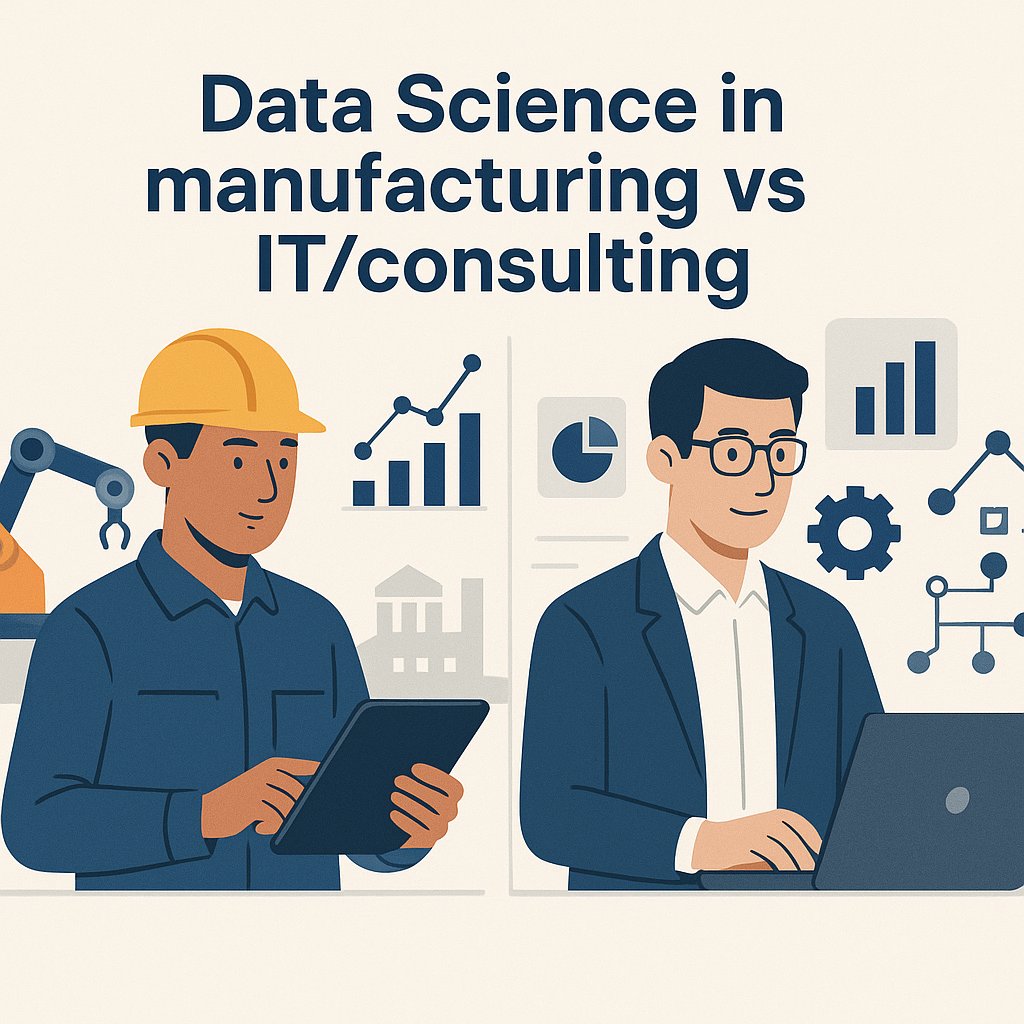
  • Data Science in manufacturing vs IT/consulting

    Data Science in manufacturing vs IT/consulting

    In today’s fast-paced world, the landscape of career opportunities is constantly shifting, particularly in fields like data science and machine learning. If you’re currently working in IT and pondering a transition into industrial data science, you may find yourself at a crossroads. Many professionals face the dilemma of choosing between familiar territory or stepping into a new, potentially rewarding environment. This article aims to shed light on considerations for transitioning into an industrial data science role, discuss the nuances of working in a manufacturing environment, and provide insights into the overall career viability in this niche.

    We will explore various aspects of the manufacturing sector, including workplace culture, day-to-day tasks, job pressures, and overall work-life balance. Additionally, we will discuss how transitioning from IT to industrial data science could enhance your professional repertoire and look at essential skills needed for success in this field.

    Stay tuned as we dive into the world of industrial data science and help you evaluate whether this career move aligns with your professional aspirations.

    Understanding the Manufacturing Environment

    When contemplating a shift from IT to a role in manufacturing data science, it’s crucial to have a clear picture of what the working environment entails. Unlike the bustling and often unpredictable atmosphere of IT and consulting firms, the manufacturing sector may provide a more stable and structured setting.

    For instance, many manufacturing jobs feature set work hours, often starting early in the morning. In some cases, workers enjoy more generous leave policies, such as leaving early on Fridays, adding a touch of flexibility to the rigid structure. This clearly contrasts with the often volatile demands faced in an IT office, where long hours and tight deadlines can sometimes blur the boundaries between work and personal time.

    Despite the structured hours, the manufacturing industry comes with its own set of pressures. If something goes awry on the production line, questions may arise that demand swift answers, even if these incidents are not frequent. However, the nature of these inquiries is typically different: they tend to focus on ensuring operational efficiency and quality rather than the urgent short-term demands of client projects common in consulting.

    Ultimately, working in a manufacturing environment can lead to a rich understanding of the production processes and how data science can influence bottom-line results. One Reddit commenter noted that having cleaner data from machines, as opposed to data littered with uncertainties from consumer interactions, can make the role more enjoyable and less frustrating than in other sectors.

    Navigating the Shift: Hype vs. Reality

    As you weigh your options, it’s essential to consider the market dynamics of industrial machine learning (ML). Currently, fields like large language models (LLMs) and generative AI are popular and heavily saturated. Some professionals are finding the hype tiring, and a move away from trendy technologies toward traditional machine learning techniques—such as gradient boosting, time series analysis, and computer vision—could rejuvenate your passion for data science.

    Manufacturing data science offers distinct niche opportunities that are often overlooked. As one Reddit commenter pointed out, industrial AI presents a unique challenge: figuring out where best to embed AI into existing processes. From predictive maintenance to anomaly detection, there are countless areas where AI can significantly improve efficiency and quality in production environments. This transition doesn’t necessarily come without risks, but they can be mitigated through careful planning and skill development.

    Furthermore, the industrial AI domain is not only viable but perhaps an astute career move. The industry’s dependency on analytics to fine-tune production processes is ever-growing, making a background in machine learning highly valuable. The crucial thing is to keep your skills current and marketable, particularly as the AI landscape continues to evolve.

    Work-Life Balance and Workplace Culture

    Aside from the technical aspects, consider the softer elements of the workplace culture. As mentioned earlier, manufacturing firms often promote a clear work-life balance by emphasizing limited overtime and fixed schedules. This allows employees to maintain a healthier personal life compared to the sometimes frenetic pace of IT roles. In fact, many manufacturing environments foster a culture where employees feel mutual accountability—when the clock strikes the end of the day, the workplace clears out, often saving late-night efforts for true emergencies.

    This culture can significantly affect your overall job satisfaction. Deviating from the “always on” culture prevalent in tech helps alleviate stress. When employees are empowered to leave on time without guilt, it often translates to higher morale and productivity during working hours. Moreover, as some professionals have noted, seeing the tangible effects of one’s work—like observing manufacturing processes firsthand—can yield more immediate job satisfaction compared to the abstract nature of many IT roles.

    Key Skills for Success in Industrial Data Science

    If you decide to take the plunge into industrial data science, knowing what skills to develop is essential for staying competitive in this market. Here are some critical areas to focus on:

    Data Engineering: Understanding how to structure and manipulate large datasets is critical. Familiarity with data pipeline architecture will set you apart.

    Time Series Analysis: As manufacturing often involves monitoring equipment and understanding trends over time, proficiency in this area will enhance your predictive capabilities.

    Predictive Modeling: Learning algorithms such as gradient boosting and anomaly detection can aid in identifying issues before they become significant problems.

    Domain Knowledge: Building an understanding of manufacturing processes and the specific machinery involved can greatly enhance your problem-solving capabilities.

    Collaboration Skills: Since you may be working in interdisciplinary teams, effective communication with engineers, management, and other stakeholders is vital.

    Taking time to develop these skills will not only make you a more appealing candidate but also better prepare you for the complexities of an industrial data science role.

    Informed Career Decision

    Transitioning from IT to industrial data science could be a fruitful and fulfilling decision, especially if you’re seeking a more structured, high-impact work environment. Weighing the impact of the manufacturing sector’s cultural and operational differences against your professional aspirations is integral to making an informed choice. Understanding the nuances of the workplace, recognizing the potential for career growth, and arming yourself with the right set of skills can ultimately position you for success.

    Before making your decision, consider conducting informational interviews with professionals already in the field. This can provide valuable insights and help further refine your understanding of what your everyday work might look like in an industrial data science role. The world of manufacturing data science is continuously evolving, filled with potential and purpose, waiting for driven individuals to step in and make their mark.

    References and Further Reading

    For those eager to delve deeper into the subject, here are some resources to explore:

    “Data Science for Manufacturing: A Practical Guide” by JohnDoe.

    “Machine Learning in Industry: A Study” by JaneSmith.

    “AI and Machine Learning for Industrial Applications,” an online course by Coursera.

    Exploring these materials can provide more tools and insights to help you navigate your career transition effectively.

  • Worst AI replacement stories (i will not promote)

    Worst AI replacement stories (i will not promote)

    As we stand on the precipice of artificial intelligence (AI) revolutionizing every facet of our life and work, a concerning trend has emerged among many startup founders and entrepreneurs: the belief that a single AI agent can effectively replace an entire business unit. While technology has advanced remarkably, leading to unprecedented automation capabilities, we must clarify the distinction between automation and replacement. In this article, we will explore the effective use of AI, why it should augment rather than eliminate human roles, and how to navigate the burgeoning landscape of AI responsibly and effectively.

    The era of AI is promising, but it is critical for entrepreneurs to grasp that AI’s ultimate role should be as an assistant that enhances productivity and decision-making processes, not as a panacea that replaces entire teams. We will discuss the appropriate application of AI across business functions, the mistakes commonly made by those seeking quick fixes, and practical advice for integrating AI into workflows responsibly. By the end of this article, readers should emerge with a clear understanding of how to leverage AI without compromising quality, creativity, and the human touch that is essential for building successful businesses.

    **Understanding Automation vs. Replacement**

    Automation and replacement are frequently conflated concepts, particularly in the context of AI. At its core, automation refers to employing technology to perform tasks with minimal human intervention. This often focuses on repetitive and time-consuming activities, such as data entry or basic customer interactions, thereby allowing human employees to devote their energy to more complex tasks. On the other hand, replacement implies a more drastic measure: substituting an entire team or function with technology, thereby removing the human element entirely.

    To illustrate the distinction, consider the role of a Business Development Representative (BDR). An AI-driven tool, like an AI BDR, can indeed assist by handling the initial outreach and data collection process. However, it cannot replace the nuanced judgment and expertise a human BDR brings to the table—whether that’s in interpreting client needs, responding to objections, or cementing relationships. Founders should realize that effective AI implementation in this context means using AI to augment the BDR’s capabilities rather than considering it a one-size-fits-all solution that can make their entire sales team obsolete.

    **The Consequences of Over-Reliance on AI**

    Many startups inadvertently fall into the trap of over-reliance on AI through what some may call the “Vibe Coding” technique. This approach, where teams rely on AI to produce software or solutions without sufficient oversight or human involvement, often results in shoddy workmanship. A real-life example comes from experiences in software development, where teams are handed incomplete or poorly conceived code that they are then told to “upload into Claude” (an AI tool) to “figure it out.” The outcome is a generic set of requirements and poor-quality code that does not meet real-world needs—effectively stunting the development process and leading to unsatisfactory products.

    This type of practice shows a greater trend where good practices are supplanted by a misguided belief that AI can do it all. As commented in prominent tech discussions, fully trusting AI with entire projects or operational areas leads to mediocre results and failed implementations. Founders must avoid taking shortcuts that lead to further complications. Integrating AI into workflows should enhance existing processes, not create chaos.

    **How to Integrate AI Responsibly**

    To maximize the effectiveness of AI without falling prey to its pitfalls, founders should adopt a systematic approach to AI integration. Here are some best practices to ensure a responsible relationship between AI and human workers:

    Define Clear Objectives: It’s essential to identify specific tasks that AI can handle efficiently. Clarity in objectives will allow teams to employ AI in a way that complements human contributions without extending too far into replacement territory.

    Assign Human Gatekeepers: No AI process should be fully automated or left without human oversight. Consider assigning team members to review AI-generated outputs to ensure quality and relevance. This will help you maintain the intricate insights that only humans can provide.

    Practice Layered Prompts: When using AI tools, providing layered and contextually-rich prompts can result in better outputs. Instead of generic queries, be descriptive about the context and expected results. This enhances the AI’s effectiveness and aids in producing more satisfactory results.

    Engage in Continuous Learning: AI is continuously evolving, and so too should your understanding of its capabilities and applications. Regular training sessions and workshops can help teams stay updated with the latest technologies, ensuring they can leverage these tools effectively.

    Foster Collaborative Environments: Encourage a culture that sees AI as a collaborator rather than a competitor. When teams understand that they’re not at risk of being replaced, they are more likely to embrace AI and use it to enhance their output. Collaboration with AI can lead to more innovative ideas and productive work.

    Pilot and Iterate: Before deploying AI solutions widely, consider running small pilot projects. This allows teams to assess the effectiveness of AI in controlled environments and make necessary adjustments. Iteration is crucial as businesses grow and change.

    **Practical Tips for Effective AI Use**

    Begin with simple tasks that require minimal decision-making before moving to complex functions. This minimizes risks associated with over-reliance on AI.

    Regularly collect feedback from team members on AI-generated outputs. Understand what aspects they find useful and which tasks still require a human touch.

    Integrate AI tools that allow for active human engagement. Choose platforms that provide transparency during data handling and maintain records that employees can access easily.

    Avoid the temptation to implement AI solutions that seem appealing without proper vetting. Research case studies and consult with those who have navigated similar paths successfully.

    **Final Thoughts**

    In the fast-paced world of entrepreneurship, embracing AI’s potential can give businesses a competitive edge, but it’s essential to do so responsibly. By understanding the distinction between automation and replacement, ensuring human oversight, and strategically integrating AI into workflows, companies can avoid the pitfalls of ill-conceived shortcuts and achieve meaningful outcomes. The goal should always be to enrich human capabilities rather than erase them.

    Ultimately, the balance lies in recognizing AI as a tool and ally rather than a substitute. For business leaders, the call to action is clear: engage deeply with AI processes, maintain a thoughtful approach, and cultivate the human intellect at the core of organizational success. With careful implementation, the future of AI in business can indeed be both productive and human-centric.

    **References and Further Reading**

    If you’re interested in deepening your understanding of AI in business, consider the following resources:

    “The AI Advantage: How to Put the Artificial Intelligence Revolution to Work” by Thomas H. Davenport.

    “Human + Machine: Reimagining Work in the Age of AI” by H. James Wilson and Paul R. Daugherty.

    Online courses from Coursera or edX focusing on AI implementation.

    For the latest discussions and community insights, platforms like Reddit or LinkedIn can offer valuable perspectives from fellow entrepreneurs and technology experts.

  • Python iOS UI development

    Python iOS UI development

    Hey there, Python enthusiasts and developers! If you’re someone who loves creating user interfaces with Python, you’ve likely heard the buzz about the recent announcement that PySide is now bringing iOS support to the mix. As the Python community continues to evolve, it’s exciting to see new possibilities for developing mobile applications, especially for iOS users. In this article, we’ll explore the recent advances made by PySide, the work of other projects like BeeWare and Flet, and delve into the broader implications of Python’s mobile application development, focusing on real-world examples and potential future developments.

    We will also reflect on the challenges developers face in creating substantial apps for iOS using Python and seek to highlight any notable applications already in existence. As a bonus, we will discuss how the upcoming Python distribution for iOS can enhance developers’ opportunities. Whether you’re a seasoned developer or just dipping your toes into mobile development, staying updated on these trends is crucial for harnessing Python’s full potential.

    Let’s set the stage by examining the exciting announcement from PySide.

    The Importance of PySide’s iOS Support

    The recent announcement that PySide is adding iOS support is a game-changer, especially for developers already familiar with this set of Python bindings for the Qt framework. With iOS being one of the most widely used mobile operating systems globally, the addition of PySide’s capabilities opens up a plethora of opportunities. No longer do developers need to rely solely on Android for their mobile applications; they can now reach a broader audience through Apple’s App Store.

    This expansion means that developers can now bring their existing Python applications to iOS, potentially with minimal modifications. More importantly, it sets a precedent in Python mobile development, encouraging other frameworks to optimize their offerings for mobile platforms.

    When examining the significance of this development, it’s essential to recognize both the opportunities and the challenges involved. While PySide provides a robust framework for creating responsive and visually appealing interfaces, the experience in deploying production-level apps on iOS has been largely absent in the Python ecosystem until now. Given the market’s increasing demand for versatile mobile applications, this comes as a timely boon.

    Exploring Other Notable Projects: BeeWare and Flet

    While PySide has just introduced iOS support, there are organizations like BeeWare that have been pioneers in this space. BeeWare is a collection of tools and libraries that allow users to create native user interfaces, enabling Python apps to run seamlessly across different platforms, including iOS. Their Toga project actively supports iOS development, making it easier for developers to build cross-platform applications. However, as some community members have expressed, many of the applications showcased by BeeWare tend to be simple tools or proof-of-concept projects, lacking the polish often seen in commercial applications.

    Similarly, the Flet team is generating a buzz with their innovative framework, which brings web and mobile apps to life using just Python. With Flet’s recent push toward iOS support, developers will have yet another tool at their disposal to build engaging applications. The blog posts from the Flet team highlight their progress, showing promising advancements in simplicity and user experience; yet, still, many apps using these frameworks remain basic.

    The key takeaway here is that while numerous projects offer the ability to develop apps for iOS using Python, the challenge persists in finding noteworthy examples of high-quality, production-level applications. We will continue to delve into this dilemma later in the article, including potential avenues for exploring even more exciting projects.

    The Future of Python Mobile Application Development

    Looking ahead, the implications of these advancements are substantial. The Python community is increasingly gravitating towards building mobile apps that can operate natively on iOS, and the demand for libraries that streamline this process is likely to grow. However, the transition from proof-of-concept to defining “real” applications can be challenging. Developers often find they lack the resources, marketing, and infrastructural support to launch applications that can thrive in a competitive marketplace.

    That said, the recent announcement about downloading Python for iOS, starting with version 3.15, will further simplify this process. It allows developers to package and distribute Python applications specifically designed for iOS without needing workarounds or extensive adaptations. This could revolutionize how developers approach iOS mobile application development using Python.

    As developers push forward, we hope to see more complex, well-polished applications that showcase the capabilities of Python within the iOS ecosystem. It’s essential for practitioners in the field to remain engaged in the community, learning from peers, sharing best practices, and collectively promoting innovative applications that can genuinely stand out in the App Store.

    Practical Tips for Developing iOS Applications with Python

    As you prepare to dive into iOS development using Python, here are some practical tips to ensure a streamlined process:

    Choose Your Framework Wisely: Familiarize yourself with the various frameworks available. While PySide is exciting, don’t discount BeeWare or Flet—they may better suit your project’s requirements.

    Start Small and Scale: If you’re new to mobile development, begin with simple applications before expanding to more complex ones. This phased approach allows you to understand the nuances of mobile interfaces and UX design.

    Engage with Community Resources: Participate in forums and discussions online. Platforms like Reddit or Stack Overflow are excellent for finding solutions and connecting with other developers exploring similar paths.

    Utilize Available Documentation: Thoroughly read the documentation available for each framework. Both PySide and BeeWare have rich resources that help onboard developers quickly.

    Attend Workshops and Meetups: Look for local or virtual meetups focused on Python mobile development. Networking will provide additional insights and unveil potential collaboration opportunities.

    Balance Reach with Quality: Remember that the goal is to reach users with impressive applications. Ensure that any app you develop not only works but is also user-friendly and aesthetically pleasing.

    The Road Ahead

    In conclusion, the recent advancements in Python mobile application development, particularly with the integration of iOS support from PySide, mark a significant milestone. By offering developers new avenues for creating effective user interfaces on one of the world’s leading mobile operating systems, we can expect exciting developments in the years to come. Though many examples of well-crafted applications are still sparse, the landscape is rapidly changing, and it will be fascinating to see what the community creates.

    As you embark on your journey into iOS app development using Python, remember to stay engaged with the evolving ecosystem, explore the tools at your disposal, and leverage the collective knowledge found in the community. Doing so will ensure not just your success, but also contribute to the thriving Python mobile development landscape.

    For further reading, consider exploring the articles outlined earlier about the PySide announcement, BeeWare, and Flet. These resources will help deepen your understanding of the available mobile development frameworks and ignite your creativity as you begin building for iOS with Python.

  • New to the Bay Area – Where do you buy affordable furniture?

    New to the Bay Area – Where do you buy affordable furniture?

    Moving to a new city can be exhilarating yet overwhelming, especially when it comes to furnishing your new home. If you’ve recently relocated to the Bay Area, like Santa Clara, and were greeted by empty rooms, rest assured that you’re not alone in your search for affordable yet quality furniture. In this article, we’ll explore some of the best options for furniture shopping, both new and used, to help you turn your empty house into a cozy home.

    Whether you’re looking for chic modern pieces or functional essentials, this guide will cover various avenues you can pursue, mitigating the stress typically associated with furnishing a new space. We’re diving into the world of online marketplaces, local stores, and thrift shops, and we’ll highlight practical advice from fellow community members along the way. So, let’s get started on your journey to cultivating a comfortable living environment!

    Exploring Online Marketplaces

    When it comes to finding the best deals on furniture, online marketplaces have made shopping both convenient and versatile. Facebook Marketplace, in particular, stands out as a prime option for budget-conscious buyers. It offers a myriad of listings, from gently used items to almost-new furniture at significantly reduced prices. Here’s a closer look at this platform:

    Facebook Marketplace allows you to buy directly from local sellers, meaning you can avoid shipping costs and often negotiate prices. Keep in mind, though, that while incredible deals can be unearthed, it’s essential to be cautious. Scammers exist, so be suspicious of new profiles and offers that seem too good to be true. For instance, if someone claims multiple interested buyers and requests a deposit, it’s a red flag. Always arrange to meet in public places, bring a friend for safety, and test the item before purchasing.

    Moreover, the community rating system helps you gauge the reliability of sellers, offering transparency that older platforms like Craigslist often lack. This process might take some work to sift through the listings, but the value often outweighs the effort.

    Local Furniture Stores for New Purchases

    If you prefer to buy new furniture, several local stores provide excellent value and return policies. IKEA stands out as a beloved favorite. Known for its sleek designs and affordability, IKEA has various options that cater to diverse styles and needs. It’s especially ideal for apartment dwellers who need functional pieces that don’t clutter their space. For enhanced shopping efficiency, consider mapping out which sections to visit before your trip. Also, don’t forget to utilize their tools like room planners to visualize how your new furniture will fit into your home.

    Target and Walmart also offer great options for new furniture at competitive prices. Target’s chic home collection features items that appeal to contemporary tastes, while Walmart often houses budget essentials. Both retailers have simple return policies that could relieve some stress should your purchase not meet your expectations.

    For online shopping, Wayfair is another option, though some users find it to be on the pricier side. Yet, it can also hold unexpected treasures, so keep an eye out for clearance sales. Amazon, with its extensive range, often includes niche sellers with unique offerings that aren’t easily found in brick-and-mortar establishments.

    Thrift Stores and Secondhand Shopping

    For those in search of unique finds, thrift stores can be a treasure trove of gems. Stores like the Salvation Army and Habitat for Humanity often have furniture pieces at a fraction of retail prices. These stores typically stock various items donated by community members, allowing you to nab quality pieces while supporting charitable causes simultaneously.

    Additionally, consider exploring platforms like Nextdoor, where neighbors sell items directly to their community. It can be particularly advantageous in Santa Clara since it’s likely you might find local graduates looking to offload furniture after transitioning out of shared living situations. You might come across everything from desks and chairs to side tables, often for little cost or even free!

    Engaging with the Local Community

    Beyond shopping apps and retail stores, tapping into online local community forums can yield unexpected results. Platforms like Reddit have specific groups for areas such as San Jose State University (SJSU) and Santa Clara University (SCU). Here, students frequently look to sell off their belongings when they move or graduate. Post a simple inquiry about available furniture, and you may find furniture pieces offered at remarkable discounts. Your local communities, colleges, and even neighborhood pages on Facebook or Nextdoor can be valuable resources for gathering leads on where to shop.

    Tips for Smart Furniture Buying

    Here are some actionable tips to help you score the best deals when shopping for furniture:

    Set a Budget: Determine how much you’re willing to spend before diving into your shopping adventure. This budget will help you stick to essential purchases, avoiding impulse buying.

    Make a List: Create a list of furniture pieces you need versus what you want. This approach ensures you prioritize key items—like a bed and a couch—over lesser necessities.

    Measure Your Space: Always measure your rooms to gauge what will fit properly. There’s nothing more disappointing than investing in a new sofa only to find it doesn’t fit through your door. As part of this, take note of space constraints or layout limitations.

    Shop Seasonally: Many furniture stores have seasonal sales events, during which you can score spectacular deals. Keep an eye on holiday weekends, back-to-school promotions, and clearance events to snag what you need at a lower price.

    Be Patient: If you’re not in a hurry, take your time to browse different marketplaces and stores. This approach allows you to explore various options thoroughly and discover better deals.

    Furnishing your new home in the Bay Area doesn’t have to be a huge financial burden. From online marketplaces to local thrift stores, many affordable options are available! By utilizing both new and secondhand markets, you can create a space that reflects your personality and meets your needs. Implementing practical shopping strategies and tapping into community resources will empower you on this exciting journey to transform an empty apartment into a welcoming home.

    As you embark on your furniture shopping adventure, remember to stay organized, be patient, and above all, have fun with it! Happy decorating!

    References and Further Reading

    1. “Consumer Reports: Furniture Buying Guide.” Consumer Reports.

    2. “IKEA: Your Ultimate Buying Guide.” IKEA.

    3. “Facebook Marketplace: A Beginner’s Guide.” Facebook Help Center.

    4. “Thrift Stores: How to Score a Great Deal.” Goodwill Industries International.

  • Hello world!

    Welcome to WordPress. This is your first post. Edit or delete it, then start writing!