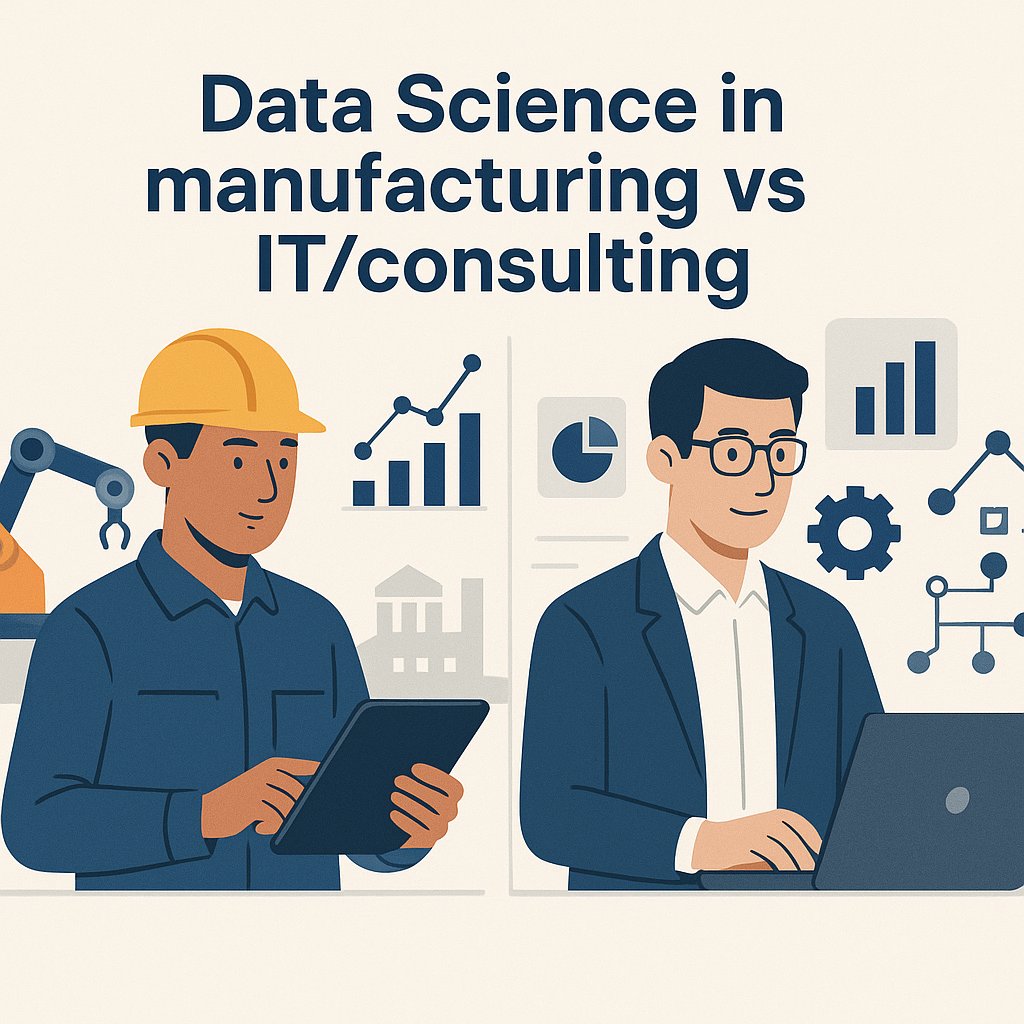
In today’s fast-paced world, the landscape of career opportunities is constantly shifting, particularly in fields like data science and machine learning. If you’re currently working in IT and pondering a transition into industrial data science, you may find yourself at a crossroads. Many professionals face the dilemma of choosing between familiar territory or stepping into a new, potentially rewarding environment. This article aims to shed light on considerations for transitioning into an industrial data science role, discuss the nuances of working in a manufacturing environment, and provide insights into the overall career viability in this niche.
We will explore various aspects of the manufacturing sector, including workplace culture, day-to-day tasks, job pressures, and overall work-life balance. Additionally, we will discuss how transitioning from IT to industrial data science could enhance your professional repertoire and look at essential skills needed for success in this field.
Stay tuned as we dive into the world of industrial data science and help you evaluate whether this career move aligns with your professional aspirations.
Understanding the Manufacturing Environment
When contemplating a shift from IT to a role in manufacturing data science, it’s crucial to have a clear picture of what the working environment entails. Unlike the bustling and often unpredictable atmosphere of IT and consulting firms, the manufacturing sector may provide a more stable and structured setting.
For instance, many manufacturing jobs feature set work hours, often starting early in the morning. In some cases, workers enjoy more generous leave policies, such as leaving early on Fridays, adding a touch of flexibility to the rigid structure. This clearly contrasts with the often volatile demands faced in an IT office, where long hours and tight deadlines can sometimes blur the boundaries between work and personal time.
Despite the structured hours, the manufacturing industry comes with its own set of pressures. If something goes awry on the production line, questions may arise that demand swift answers, even if these incidents are not frequent. However, the nature of these inquiries is typically different: they tend to focus on ensuring operational efficiency and quality rather than the urgent short-term demands of client projects common in consulting.
Ultimately, working in a manufacturing environment can lead to a rich understanding of the production processes and how data science can influence bottom-line results. One Reddit commenter noted that having cleaner data from machines, as opposed to data littered with uncertainties from consumer interactions, can make the role more enjoyable and less frustrating than in other sectors.
Navigating the Shift: Hype vs. Reality
As you weigh your options, it’s essential to consider the market dynamics of industrial machine learning (ML). Currently, fields like large language models (LLMs) and generative AI are popular and heavily saturated. Some professionals are finding the hype tiring, and a move away from trendy technologies toward traditional machine learning techniques—such as gradient boosting, time series analysis, and computer vision—could rejuvenate your passion for data science.
Manufacturing data science offers distinct niche opportunities that are often overlooked. As one Reddit commenter pointed out, industrial AI presents a unique challenge: figuring out where best to embed AI into existing processes. From predictive maintenance to anomaly detection, there are countless areas where AI can significantly improve efficiency and quality in production environments. This transition doesn’t necessarily come without risks, but they can be mitigated through careful planning and skill development.
Furthermore, the industrial AI domain is not only viable but perhaps an astute career move. The industry’s dependency on analytics to fine-tune production processes is ever-growing, making a background in machine learning highly valuable. The crucial thing is to keep your skills current and marketable, particularly as the AI landscape continues to evolve.
Work-Life Balance and Workplace Culture
Aside from the technical aspects, consider the softer elements of the workplace culture. As mentioned earlier, manufacturing firms often promote a clear work-life balance by emphasizing limited overtime and fixed schedules. This allows employees to maintain a healthier personal life compared to the sometimes frenetic pace of IT roles. In fact, many manufacturing environments foster a culture where employees feel mutual accountability—when the clock strikes the end of the day, the workplace clears out, often saving late-night efforts for true emergencies.
This culture can significantly affect your overall job satisfaction. Deviating from the “always on” culture prevalent in tech helps alleviate stress. When employees are empowered to leave on time without guilt, it often translates to higher morale and productivity during working hours. Moreover, as some professionals have noted, seeing the tangible effects of one’s work—like observing manufacturing processes firsthand—can yield more immediate job satisfaction compared to the abstract nature of many IT roles.
Key Skills for Success in Industrial Data Science
If you decide to take the plunge into industrial data science, knowing what skills to develop is essential for staying competitive in this market. Here are some critical areas to focus on:
Data Engineering: Understanding how to structure and manipulate large datasets is critical. Familiarity with data pipeline architecture will set you apart.
Time Series Analysis: As manufacturing often involves monitoring equipment and understanding trends over time, proficiency in this area will enhance your predictive capabilities.
Predictive Modeling: Learning algorithms such as gradient boosting and anomaly detection can aid in identifying issues before they become significant problems.
Domain Knowledge: Building an understanding of manufacturing processes and the specific machinery involved can greatly enhance your problem-solving capabilities.
Collaboration Skills: Since you may be working in interdisciplinary teams, effective communication with engineers, management, and other stakeholders is vital.
Taking time to develop these skills will not only make you a more appealing candidate but also better prepare you for the complexities of an industrial data science role.
Informed Career Decision
Transitioning from IT to industrial data science could be a fruitful and fulfilling decision, especially if you’re seeking a more structured, high-impact work environment. Weighing the impact of the manufacturing sector’s cultural and operational differences against your professional aspirations is integral to making an informed choice. Understanding the nuances of the workplace, recognizing the potential for career growth, and arming yourself with the right set of skills can ultimately position you for success.
Before making your decision, consider conducting informational interviews with professionals already in the field. This can provide valuable insights and help further refine your understanding of what your everyday work might look like in an industrial data science role. The world of manufacturing data science is continuously evolving, filled with potential and purpose, waiting for driven individuals to step in and make their mark.
References and Further Reading
For those eager to delve deeper into the subject, here are some resources to explore:
“Data Science for Manufacturing: A Practical Guide” by JohnDoe.
“Machine Learning in Industry: A Study” by JaneSmith.
“AI and Machine Learning for Industrial Applications,” an online course by Coursera.
Exploring these materials can provide more tools and insights to help you navigate your career transition effectively.
Leave a Reply